


Ethical Counseling grounded in clarity, care and connection.
American Counseling Association, the professional counseling focused on insight, balance and well-being.
Overview of the American Counseling Association
Identity and Membership
Identity: The ACA is the world’s largest association exclusively representing professional counselors.
Membership: Open to professional counselors, students, educators, and supervisors at all career stages.
Structure: Includes chartered divisions, regional organizations, and state branches that extend ACA’s reach nationwide.
Founding and History
Founding: Established in 1952 through the merger of four independent associations focused on guidance, personnel work, and counselor training.
Evolution: The organization officially became the American Counseling Association on July 1, 1992, during a Governing Council meeting in Baltimore.
Organizational Scope
Scope: Unifies diverse counseling subfields including mental health, school, career, marriage and family, addictions, and rehabilitation counseling.
Core Purpose: Enhancing quality of life by promoting counselor development and leveraging counseling practices to foster respect for human dignity and diversity.
Introduction
The American Counseling Association (ACA) stands as the largest professional organization for counselors in the United States, serving as the central voice for the counseling profession. The American Counseling Association (ACA) is a membership organization representing licensed professional counselors, counseling students, and other counseling professionals in the United States. This page provides a comprehensive overview of the ACA, including its mission, organizational structure, membership options, advocacy efforts, and available resources. It is designed for counselors, students, educators, and anyone interested in the counseling profession. The ACA is important because it serves as the central organization for professional counselors in the U.S., offering support, advocacy, and resources that advance the counseling field and promote mental health across communities.
ACA Membership at a Glance
Main Functions and Benefits of ACA Membership:
Access to flagship publications, including the Journal of Counseling & Development and the monthly magazine Counseling Today
Professional development resources such as online courses, publications, and networking opportunities
Legislative advocacy for wider access to mental health care and support for initiatives like the Counseling Compact
Ethics consultations to help members address complex ethical dilemmas in their practice
Discounts on professional liability insurance, auto, and home insurance
Career services including job boards, resume reviews, and guidance on starting a private practice
Free and discounted online continuing education courses and events for networking and learning
Continuing education (CE) credits required for maintaining state licensure
Opportunities to join 20 specialized divisions focused on areas such as school counseling, marriage and family therapy, addictions, and social justice
Promotion of a unified counselor identity, multicultural approaches, social justice, and inclusivity
Community-building for counselors across various settings to help diverse individuals with mental health goals
ACA Mission, Values, and Core Functions
Mission and Core Values
ACA’s mission centers on advancing the counseling profession, promoting mental health across communities, and upholding human dignity, equity, and inclusion in all aspects of practice. As a not-for-profit, professional and educational association headquartered in Alexandria, Virginia, ACA serves counselors working across the full spectrum of settings—from schools and agencies to private practice, colleges, and community organizations.
Core Values:
Respect for diversity and multicultural counseling competence
Commitment to social justice and equitable access to services
Protection of client autonomy and self-determination
Maintenance of professional competence through ongoing training
Adherence to ethical practice standards across all work settings
Core Functions
Setting Ethical Standards: The ACA publishes and maintains the ACA Code of Ethics, which sets ethical standards for counseling practice across the U.S. and internationally. This code guides professional conduct on issues including confidentiality, boundaries, and cultural responsiveness.
Providing Continuing Education: Offering webinars, conferences, practice briefs, and learning institutes to support professional development throughout counselors’ careers.
Developing Resources: Creating toolkits, research summaries, and practice guidelines that inform evidence-based counseling interventions.
Federal and State Advocacy: Lobbying on legislation affecting mental health access, insurance reimbursement, and protection of counseling scope of practice.
Supporting Research and Scholarship: Publishing peer-reviewed journals, books, and grants that advance excellence in counseling knowledge.
Building Community: Connecting ACA members through divisions, branches, and networking platforms that foster collaboration.
History and Organizational Structure
Key Historical Milestones
1952: Founded through the merger of four organizations: the National Vocational Guidance Association, National Association of Guidance and Counselor Trainers, Student Personnel Association for Teacher Education, and American College Personnel Association.
1952–1970s: Established headquarters, expanded membership, and began advocating for counselor role definitions and federal funding.
1983: Rebranded as the American Association of Counseling and Development (AACD), deliberately incorporating “counseling” into the organizational identity.
1980s: Adopted foundational versions of the ACA Code of Ethics, establishing ethical standards for the profession.
July 1, 1992: Officially became the American Counseling Association, solidifying its mission-oriented branding.
2012 and Beyond: Celebrated 60 years of advocacy, expanded international connections, and continued pushing for licensure portability.
Organizational Structure
National Headquarters: Located in Alexandria, Virginia, serving as the central hub for policy, publications, and member services.
Chartered Divisions: Approximately 20 specialized divisions representing distinct counseling areas and populations.
Regions: Multi-state groupings that coordinate leadership development and regional initiatives.
Branches: State and territorial organizations (such as the Illinois Counseling Association) that extend ACA’s mission locally.

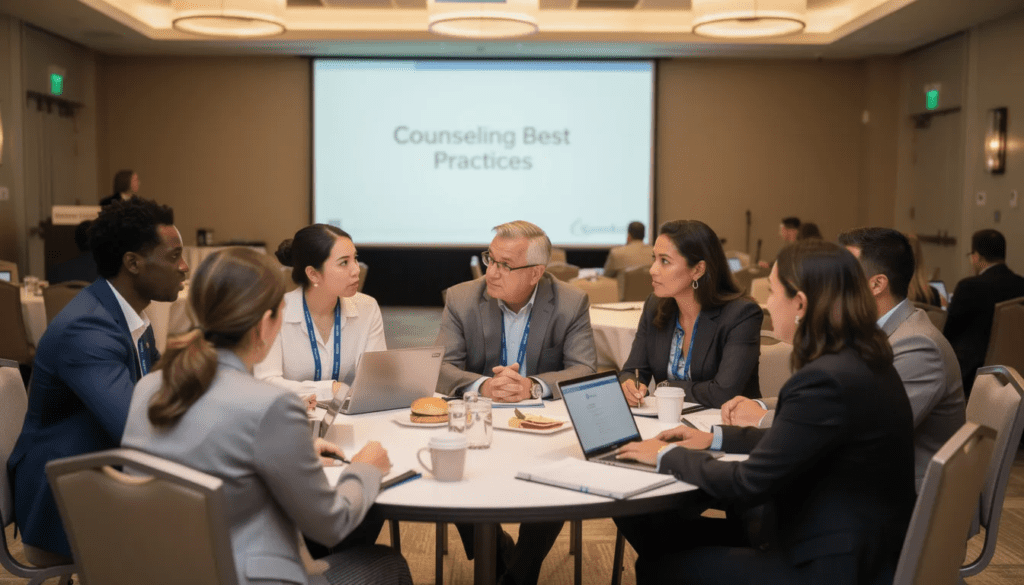
A group of professional counselors collaborates around a table in a modern office, discussing strategies for mental health support and advocacy within the counseling profession. The diverse team reflects a commitment to social justice and inclusion, emphasizing their dedication to professional development and ethical practices in various counseling programs.
Divisions, Regions, and Branches of ACA
Division Types and Focus Areas
School counseling divisions address the unique challenges of K-12 educational environments.
Counselor education and supervision divisions support academic programs and training excellence.
Multicultural counseling divisions promote culturally responsive practice and inclusion.
Career development divisions focus on vocational guidance and workforce issues.
Rehabilitation and mental health divisions serve counselors working with specific populations.
Assessment and research divisions advance excellence in evaluation and evidence-based practice.
Role of Regions
Coordinate leadership training and professional development across multiple states.
Host regional conferences that bring together counselors from neighboring areas.
Distribute policy updates and advocacy alerts relevant to geographic concerns.
Support branch development and inter-state collaboration.
Branch Functions
State organizations like the Illinois Counseling Association extend ACA’s mission at local levels.
Offer state-specific conferences, continuing education, and networking opportunities.
Engage in state-level advocacy and legislation monitoring.
Provide leadership opportunities and mentoring for emerging professionals.
Publish newsletters and host webinars addressing regional issues.
Alignment with National Goals
Divisions and branches maintain their own initiatives while remaining connected to ACA’s core mission.
Members can join multiple divisions to explore different specialty areas.
Branch and division leadership serve as pathways to national ACA involvement.
The Counseling Compact and Licensure Mobility
How the Compact Works
Participating states agree to recognize each other’s counseling licenses under shared standards.
Counselors maintain their home state license while gaining authorization to practice in compact member states.
The compact facilitates both in-person practice when counselors relocate and telehealth services across state borders.
States joining the compact agree to baseline requirements for licensure, ensuring consumer protection.
ACA’s Position and Advocacy
ACA actively supports the Counseling Compact as a mechanism to expand access to mental health care.
The organization emphasizes benefits for underserved and rural areas where counselor shortages exist.
ACA advocates for consistent licensure standards nationwide while respecting state autonomy.
Updates and new state adoptions continue into late 2025, with more states expected to join.
Impact on Practicing Counselors
Reduces barriers for counselors who move between states for personal or professional reasons.
Enables telehealth practice across state lines without obtaining multiple individual licenses.
Supports military families and other mobile populations who need continuity of care.
Aligns with ACA’s broader advocacy for portability, access, and protection of counseling practice.
Education, Federal Student Loans, and ACA Advocacy
Federal Student Loan Policy Changes
Significant changes to federal student loan limits are scheduled for implementation on July 1, 2026.
Annual federal loan caps for non-doctoral counseling programs will be set around $20,500 per year.
These changes stem from broader federal legislation and rulemaking affecting graduate education nationwide.
The Department of Education’s policy decisions directly impact affordability of counseling master’s degrees.
Potential Impacts on the Field
Lower annual borrowing limits may create financial barriers for students in counseling programs.
Workforce shortages in mental health settings could worsen if fewer individuals can afford graduate training.
Students may need to rely more heavily on private loans, scholarships, or extended completion timelines.
Programs in higher-cost regions face particular challenges in supporting student affordability.
ACA’s Advocacy Efforts
Monitors federal government policy and rulemaking affecting counselor education.
Mobilizes members to contact legislators and participate in advocacy campaigns.
Provides updates, talking points, and toolkits to support effective grassroots advocacy.
Collaborates with academic institutions and related organizations to amplify concerns.
Works to protect access to counseling education and prevent workforce gaps.
Publications, Resources, and Professional Development
Flagship Publications
The ACA Code of Ethics provides the foundational ethical framework for professional counseling practice. The ACA publishes and maintains the ACA Code of Ethics, which sets ethical standards for counseling practice across the U.S. and internationally.
Peer-reviewed journals publish original research, case studies, and theoretical developments in the field.
Counseling Today, ACA’s monthly magazine, delivers news, practice insights, and member updates.
Publications inform counselors about emerging issues, interventions, and professional standards.
Book Program
ACA publishes books across the full range of counseling topics and populations.
Seasonal lineups (such as winter 2025 and spring 2026 releases) feature new titles regularly.
Recent and upcoming editions address decolonial practice, anti-oppressive counseling, and specialized interventions.
Books serve counselors, supervisors, educators, and students seeking deeper exploration of specific topics.
Continuing Education Offerings
Live and on-demand webinars cover ethics, clinical techniques, supervision, and emerging issues.
Practice briefs on platforms like Counseling Nexus offer quick-reference guidance for practitioners.
Intensive learning institutes provide immersive professional development experiences.
Members receive discounts on continuing education products and events.

Events and Conferences
Annual conferences bring together thousands of counselors for education, networking, and advocacy.
Ethics summits and specialty conferences address focused topics in depth.
Learning institutes scheduled in early spring 2026 offer multi-day intensive training.
Check ACA’s calendar for proposal deadlines and registration windows throughout the year.
A stack of professional development books related to the counseling profession is arranged neatly on a desk, accompanied by a coffee cup, symbolizing the commitment of professional counselors to ongoing education and well-being in various practice settings. This scene reflects the importance of resources and training in the field of mental health and advocacy.
Ethics, Advocacy, and Notable ACA Actions
The ACA Code of Ethics
Guides professional conduct on client autonomy, informed consent, and self-determination.
Addresses cultural responsiveness and the obligation to serve diverse populations competently.
Establishes standards for confidentiality, record-keeping, and professional boundaries.
Provides frameworks for ethical decision-making in complex situations.
Updated periodically to reflect evolving professional understanding and societal needs.
The ACA publishes and maintains the ACA Code of Ethics, which sets ethical standards for counseling practice across the U.S. and internationally.
Notable Advocacy Actions
In 2016, ACA made the decision to relocate its 2017 annual conference from Tennessee to California in response to state legislation thatconflicted with ACA’s ethical commitments to non-discrimination.
ACA regularly submits policy comments on federal regulations affecting counseling practice and mental health care.
The organization joins coalitions opposing legislation that could harm clients or restrict ethical practice.
ACA has historically advocated for licensure, accreditation, and federal recognition of counseling as a profession.
Ongoing Advocacy Themes
Suicide prevention awareness and school mental health initiatives.
Equitable access to counseling services across communities and populations.
Protection of counseling scope of practice from legislative and regulatory threats.
Support for research funding and evidence-based intervention development.
Opposition to policies that would require counselors to discriminate against clients.
Related Organizations and ACA Partnerships
CACREP (Council for Accreditation of Counseling and Related Educational Programs)
Functions as the specialized accreditor for counseling programs in higher education.
Sets curriculum and training standards for master’s and doctoral counseling degrees.
Accreditation signals program quality and is often required for licensure in various states.
Works closely with ACA to ensure educational programs prepare competent professionals.
NBCC (National Board for Certified Counselors)
Incorporated in 1982 as a national credentialing organization for counselors.
Administers the National Counselor Examination (NCE) and other specialty exams.
Maintains the National Certified Counselor (NCC) credential and specialty certifications.
Provides a portable credential recognized across states and internationally.
Chi Sigma Iota
International counseling honor society promoting scholarship and excellence.
Recognizes outstanding counseling students and professionals.
Supports research, leadership development, and professional community building.
Chapters exist at counseling programs across the United States and internationally.
Professional Liability Partnerships
ACA maintains a long-standing partnership with professional liability providers such as HPSO.
In the early 2000s, ACA selected financially stable carriers to protect members following the insolvency of prior insurance arrangements.
Liability coverage is essential for counselors to manage risk in their practice settings.
ACA members receive access to group rates and specialized coverage options.
Membership, Careers, and Professional Opportunities
Membership Benefits
Access to ACA publications, including journals, Counseling Today, and the ACA Code of Ethics.
Reduced rates on conferences, continuing education, and professional development events.
Professional liability insurance options through ACA-endorsed providers.
Advocacy representation on federal and state policy issues affecting the profession.
Networking opportunities through divisions, branches, and online communities.
Discounts on books, webinars, and other ACA resources.
Career Paths Relevant to ACA Members
Clinical mental health counselors serving individuals, couples, and families.
School counselors supporting student well-being and academic development.
College counselors addressing student mental health on campus.
Counseling supervisors providing training and oversight for developing professionals.
Counselor educators teaching in academic programs and conducting research.
Clinical directors leading counseling agencies and behavioral health organizations.
Rehabilitation counselors working with individuals with disabilities.
Career counselors and vocational specialists supporting workforce development.
Support for Students and Early-Career Counselors
Student membership categories offer lower rates and full access to resources.
ACA connects members to internship and job opportunities in counseling, education, and health care.
Mentoring programs and networking events support career transitions.
Division and branch involvement provides leadership experience and professional visibility.
Conference presentations and publication opportunities build academic and professional credentials.
A group of young professionals engaged in networking at a professional association event, discussing topics related to the counseling profession, mental health, and professional development. The atmosphere is vibrant, with attendees sharing resources and advocating for social justice within various practice settings.

How to Get Involved with the American Counseling Association
Steps to Join and Participate
Register through ACA’s online membership portal.
Select from membership categories including professional, student, retired, and new professional.
Students and early-career counselors can access discounted membership rates.
Renew your membership annually to maintain continuous benefits.
Participating in Divisions and Branches
Join one or more of ACA’s 20 divisions to connect with specialty areas.
Affiliate with your state branch (such as the Illinois Counseling Association) for local networking.
Divisions and branches offer their own conferences, newsletters, and leadership opportunities.
Explore different groups to find the best fit for your practice settings and interests.
Volunteering and Contributing
Apply for committee positions at the national, regional, or branch level.
Submit presentation proposals for annual conferences and regional events.
Contribute articles, book reviews, or practice insights to ACA publications.
Serve as a mentor for students and early-career professionals in your area.
Staying Informed
Subscribe to Counseling Today and division newsletters for regular updates.
Monitor ACA’s calendar for annual conference timelines and proposal deadlines.
Watch for seasonal announcements about new book releases and webinar series.
Follow ACA on social media platforms for advocacy alerts and community news.
Supporting Advocacy
Engage in ACA’s advocacy campaigns by contacting legislators on key issues.
Share ACA resources with colleagues, supervisors, and community partners.
Participate in advocacy days and policy briefings when available.
Use ACA’s toolkits and talking points to inform conversations about counseling priorities.
Your involvement strengthens the collective voice of the counseling profession. Whether you’re a student exploring the field, a seasoned practitioner seeking community, or an educator shaping the next generation of counselors, ACA offers pathways to grow, connect, and make a difference. Register today and join the thousands of professionals who are advancing counseling’s mission across the country.